Author

Anna Persson

Writer and buyer guide editor

Editorial focus

Anna Persson writes Home Charging Guide's buyer-facing and educational pages. Her work focuses on helping people understand what owning and installing a home EV charger actually demands before they spend money.

How she works

Her pages are built from manufacturer documentation, public specifications, electrical-code and safety details where they matter, and repeated buyer pain points from real-world installs.

Why this matters

The goal is simple: make the next decision clearer, cut the marketing noise, and say when the wrong charger or the wrong install path is still the wrong answer even if the brand is good.

Written by Anna Persson

Guides

Tesla vs ChargePoint Home Charger Compared
2026-07-05Comparison

Tesla vs ChargePoint Home Charger Compared

Tesla's Universal Wall Connector carries both connectors and hardwires at 48A. ChargePoint Home Flex plugs in or hardwires. The honest pick for your car.

Quick answer: Both are credible Level 2 home chargers priced around $550 to $700, and the installed cost is the same either way because the install, not the box, sets the bill. The Tesla Universal Wall Connector is the better all-around pick for most buyers: it carries both a J1772 and a NACS connector in one unit, so it is not a connector gamble, and it hardwires at 48A. The ChargePoint Home Flex wins on flexibility, since it installs plug-in or hardwired and its amperage is adjustable, and on its mature app and the largest public charging network. Pick Tesla for the dual connector, pick ChargePoint if you want plug-in flexibility or lean on the network.

TeslaChargePointEV ChargerComparisonHome FlexUniversal Wall Connector
Smart vs Dumb EV Charger: Do You Need the App?
2026-07-05Comparison

Smart vs Dumb EV Charger: Do You Need the App?

Your EV already schedules its own charging. When a smart charger earns its price, and the Enel X Way shutdown that bricked JuiceBox apps overnight.

Quick answer: For most people whose car already schedules its own charging, a WiFi smart charger is a convenience, not a requirement, and a simple reliable charger is a fine choice. Smart features earn their price in three cases: a shared or capacity-limited circuit that needs load management or power sharing, a utility rebate or time-of-use plan that requires a connected charger, or a household tracking cost across several drivers. The risk to weigh is app dependence. When Enel X Way USA shut down in October 2024, JuiceBox owners kept the ability to charge but lost scheduling and app control on hardware that still worked. Favor chargers that keep their core functions working locally if the app or the company disappears.

Smart ChargerHome EV ChargingEV Charger BuyingComparisonTime-of-UseApp Dependence
Real Cost of Installing an EV Charger (2026)
2026-07-05Budget

Real Cost of Installing an EV Charger (2026)

The charger is $350 to $800. Installed, a job near the panel runs $500 to $1,500, and a panel upgrade pushes it to $4,000. The real line items.

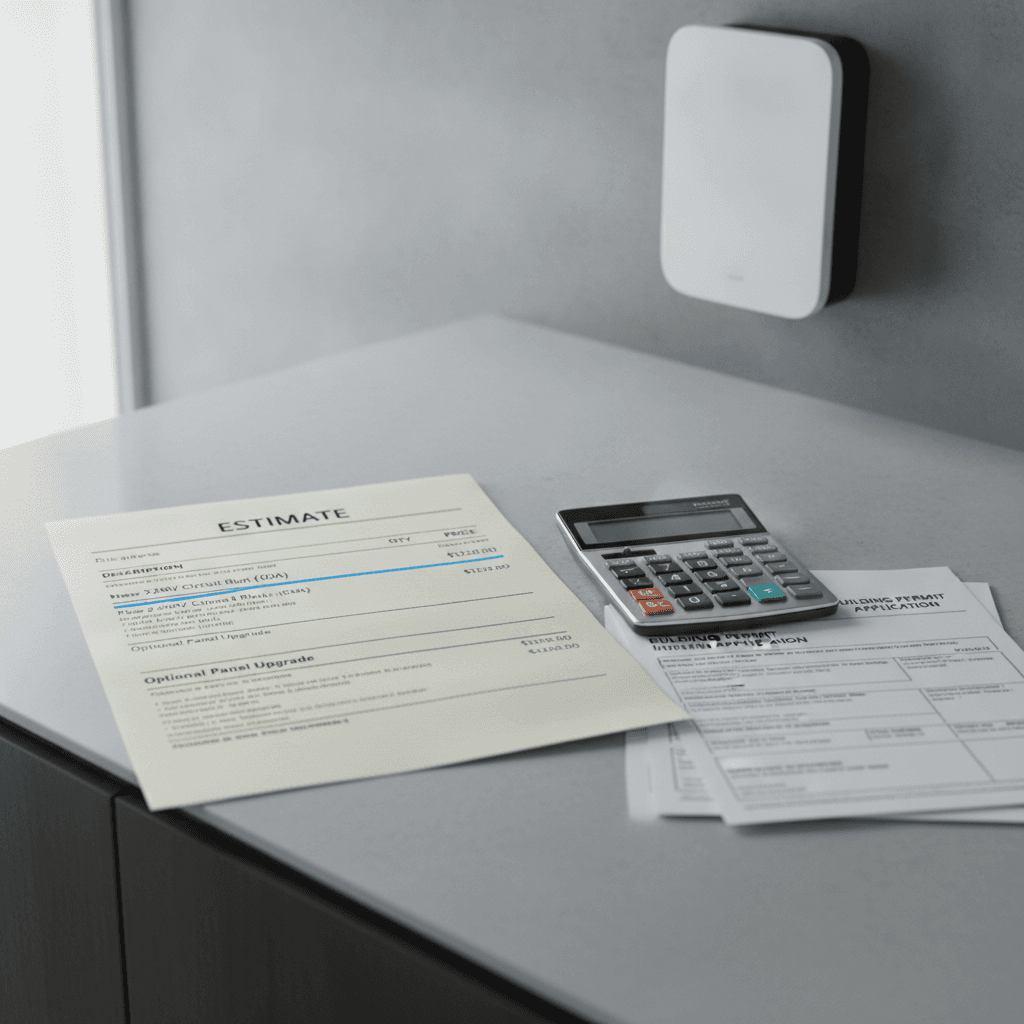
Quick answer: A good Level 2 home EV charger is a $350 to $800 box, and the install is where the real money lives. A short run near an existing panel with open capacity lands around $500 to $1,500 all in, including the charger. A panel or service upgrade, or a long run to a detached garage, pushes the same project to $1,500 to $4,000 or more. The single biggest surprise is the panel upgrade, and a load calculation before the electrician arrives tells you whether you face one.

EV ChargerInstallation CostBuying GuideBudgetPanel UpgradeLevel 2
NEMA 14-50 Outlet Safety for EV Charging
2026-07-05Installation

NEMA 14-50 Outlet Safety for EV Charging

Cheap NEMA 14-50 outlets melt under continuous EV load. Why makers steer buyers to hardwiring or industrial receptacles, and what GFCI code requires.

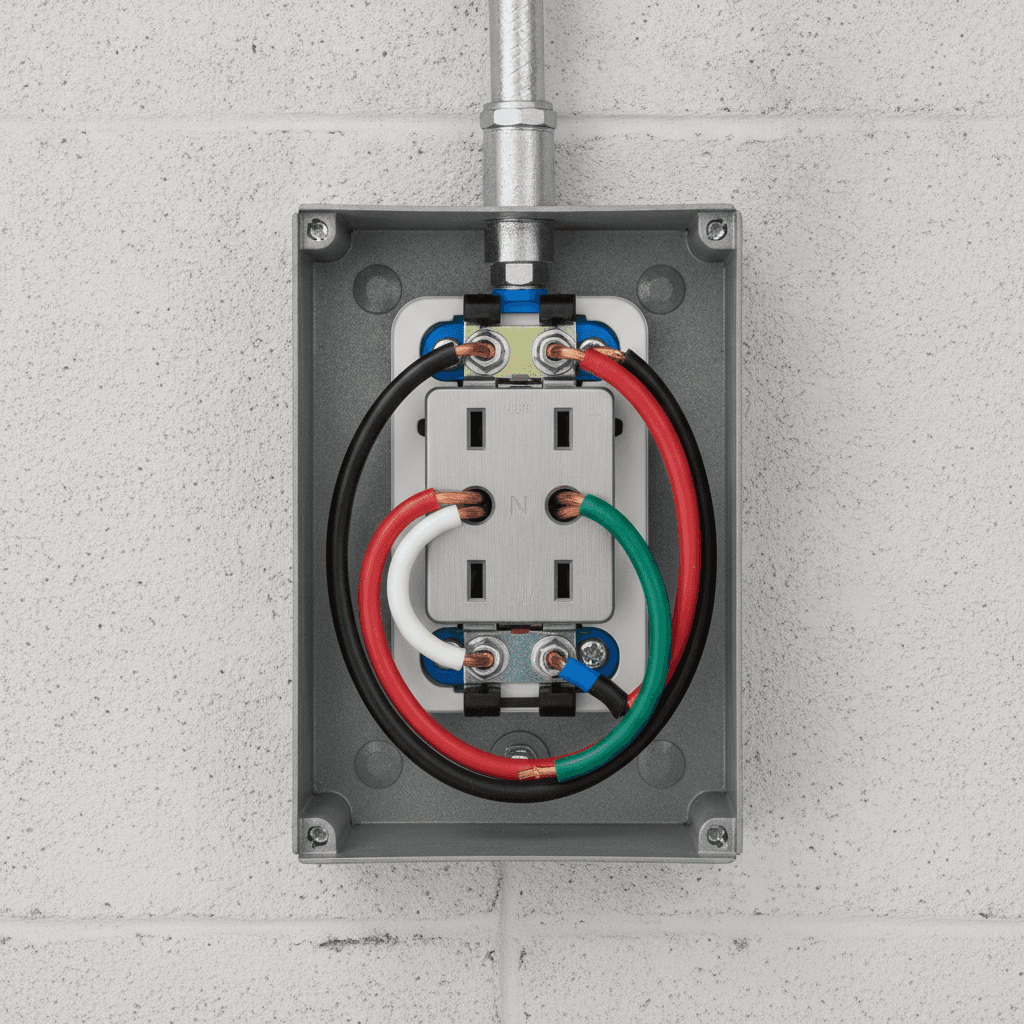
Quick answer: A NEMA 14-50 outlet is safe for EV charging only if it is an industrial-grade receptacle, installed to code by a licensed electrician, on a GFCI-protected circuit with tight terminations. The cheap $10 to $15 residential 14-50 outlets rated for 60 degrees C are the ones that melt, because a car pulls near-maximum current for hours, not the few minutes a stove or dryer runs. That is why the 2020 and later National Electrical Code requires GFCI protection on any receptacle used for EV charging (NEC 625.54), and why Tesla and others now recommend hardwiring the charger instead. If you go plug-in, use an industrial 14-50 such as a Hubbell or Bryant rated for 75 degrees C, not the big-box unit.

EV Charger SafetyNEMA 14-50Home EV ChargingNECGFCIInstallation
NACS vs J1772: Will Your EV Charger Be Obsolete?
2026-07-05Comparison

NACS vs J1772: Will Your EV Charger Be Obsolete?

NACS is becoming the US standard, but a good J1772 charger is not a mistake to buy today. The Tesla Universal Wall Connector now does both plugs.

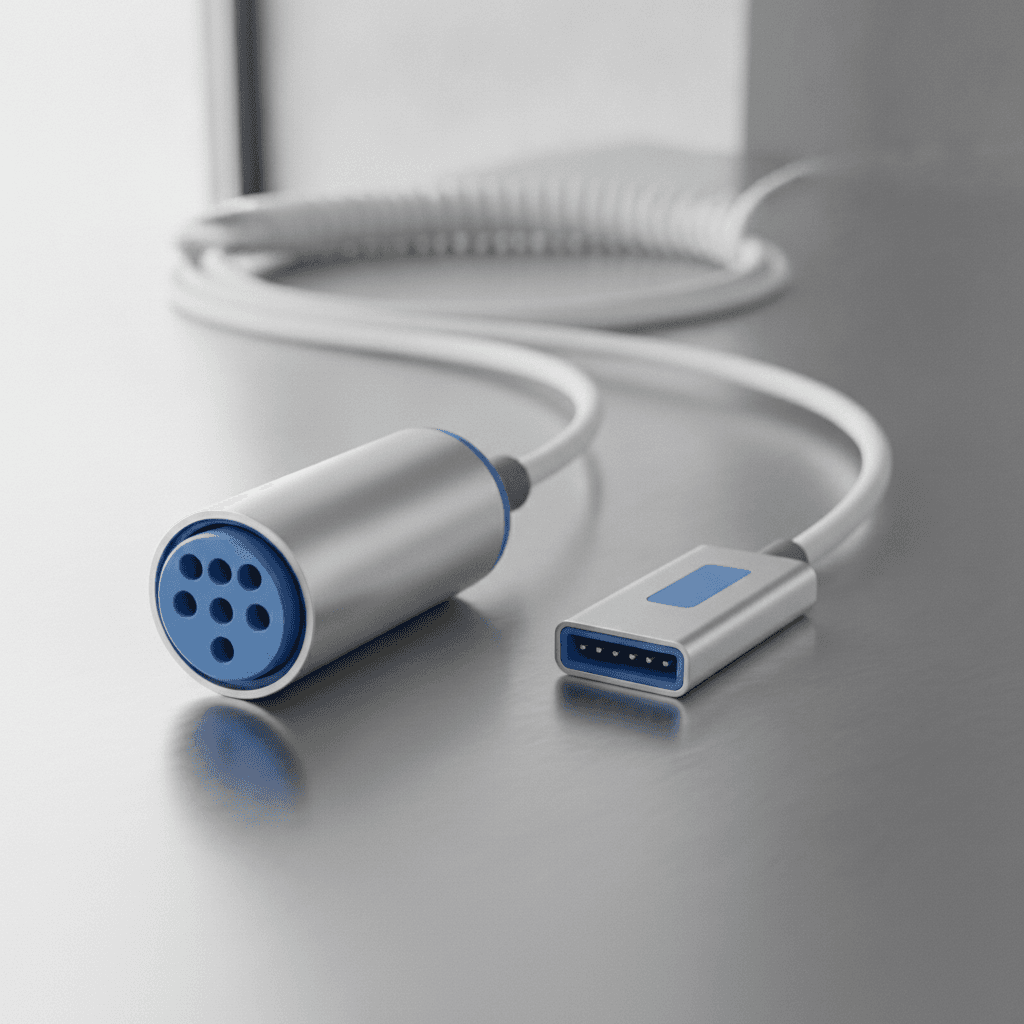
Quick answer: NACS (the Tesla-style connector, standardized as SAE J3400) is becoming the default port on new US EVs, but a J1772 Level 2 home charger you buy today is not obsolete. The charger connector and the car port are bridged with a cheap adapter, and the 240V wiring in your wall does not change either way. The safest hedge is a charger that already speaks both, like the Tesla Universal Wall Connector, about $550 for a 48 amp unit with NACS plus an integrated J1772 adapter. Buy the charger for its amperage, safety listing, and install path, not out of connector fear.

NACSJ1772Home EV ChargingEV Charger BuyingComparisonConnectors
Hardwired vs Plug-In EV Charger: Which to Pick
2026-07-05Charger Type

Hardwired vs Plug-In EV Charger: Which to Pick

Plug-in is flexible, but a code NEMA 14-50 outlet is $500 to $1,200. Hardwired is required above 48A. The honest call for your home and panel.

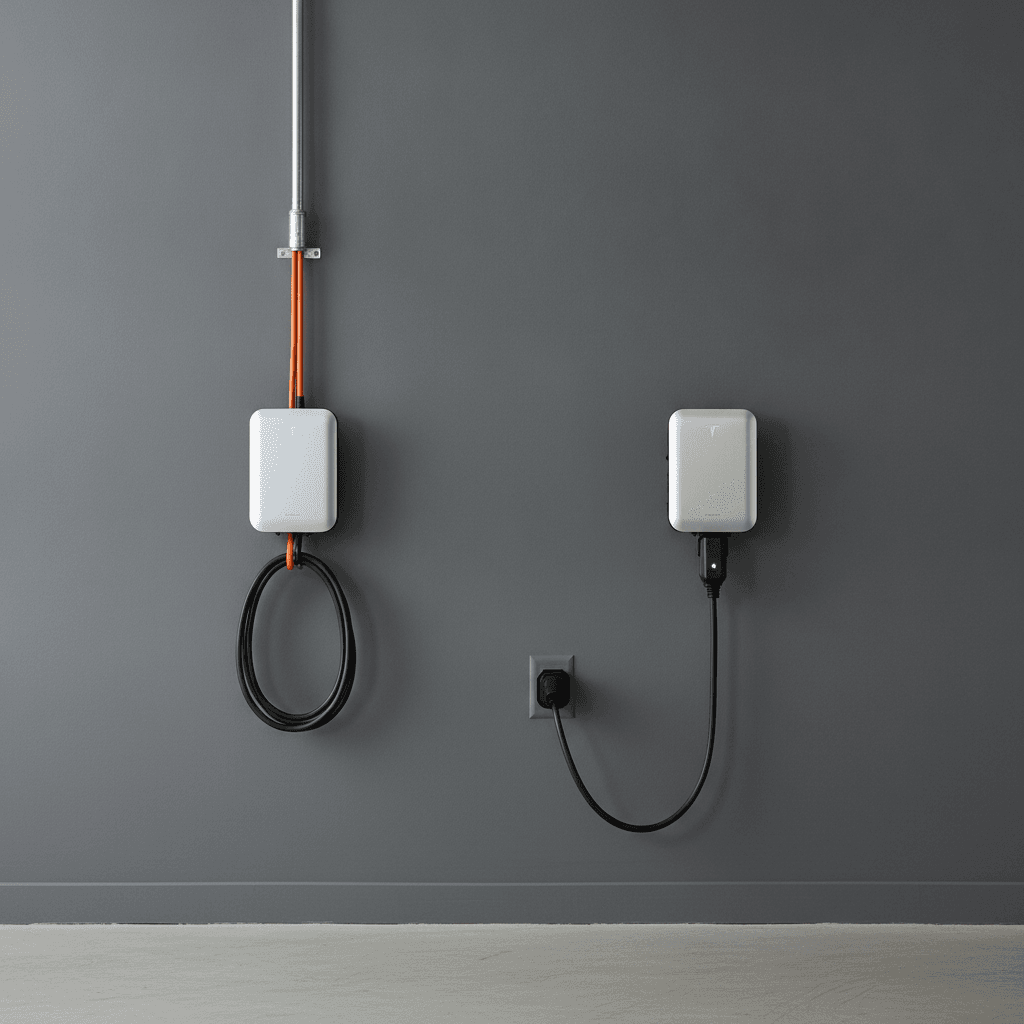
Quick answer: Plug-in wins on flexibility and is cheaper only if a code-compliant NEMA 14-50 outlet already exists. Hardwired wins on higher amperage, since anything above 48A must be hardwired, and it avoids the outlet as a failure point. If you already have a proper 14-50 with a GFCI breaker, plug-in is the easy call. If you are running a new circuit anyway, hardwiring a 48A unit often costs about the same and is the safer, higher-output choice. Renters and frequent movers should plug in. Owners settling in should usually hardwire.

EV ChargerHardwiredPlug-InNEMA 14-50InstallationNEC
EV Charger Safety: Wiring, GFCI, Permits, Fire Risk
2026-07-05Installation

EV Charger Safety: Wiring, GFCI, Permits, Fire Risk

A home EV charger is a continuous 240V load. Undersized wire, cheap 14-50 outlets, and skipped permits start fires. What NEC and NFPA actually require.

Quick answer: A home EV charger is a continuous 240 volt load that can run for hours, so it is only as safe as its weakest connection. The four things that start fires are undersized wire, a cheap non GFCI outlet, loose or backstabbed connections, and skipped permits and inspection. The National Electrical Code requires the circuit and breaker to be sized at 125 percent of the charger's rated current, which is why a 48 amp charger needs a 60 amp breaker and 6 AWG copper wire (NEC 625.41). Every part of the 240V circuit is a licensed electrician's job, never a do-it-yourself one.

EV Charger SafetyHome EV ChargingNECElectrical SafetyGFCIInstallation
EV Charger Rebates by State: How to Find Yours
2026-07-05Budget

EV Charger Rebates by State: How to Find Yours

Utility and state EV charger rebates range from $200 to $2,000+. How to find yours, plus time-of-use rates, and honest math on what it saves.

Quick answer: Most home EV charger rebates come from your electric utility, not the state, and they typically run from $200 to $500 for the charger, with some California programs reaching $2,000 or more for income-qualified households. The federal 30C tax credit, worth 30 percent up to $1,000, expired for residential installs on June 30, 2026, so as of July 2026 the live money is utility and state programs plus time-of-use rates. To find yours, search your utility's name plus 'EV charger rebate', then check your state energy office and the US Department of Energy Alternative Fuels Data Center. The bigger long-term saving is usually the time-of-use rate, not the one-time rebate.

RebatesHome EV ChargingTime-of-UseEV Charger BuyingIncentivesCost
EV Charger Buying Mistakes: The 6 Big Regrets
2026-07-05Final Decision

EV Charger Buying Mistakes: The 6 Big Regrets

The regrets that show up after install: obsolete-connector fears, a panel upgrade you did not need, a cheap 14-50 outlet, and an app-bricked charger.

Quick answer: The most common home EV charger regrets are not about the box, they are about the install and the fit. Buyers overpay for a 48 amp charger and a panel upgrade they did not need when a 32 or 40 amp unit would fill the car by morning, put in a cheap NEMA 14-50 outlet that later melts, buy an app-dependent charger that loses features when the company folds, or panic about the NACS versus J1772 connector and buy the wrong hedge. The fix is boring: size the charger for your car and your panel, hardwire or use an industrial outlet, favor chargers that work without the app, and pick a unit that speaks both connectors. Get the install quoted before you fall in love with a product page.

EV Charger BuyingBuying MistakesHome EV ChargingPanel UpgradeNEMA 14-50App Dependence
EV Charger Amperage: 32A vs 40A vs 48A
2026-07-05Charger Type

EV Charger Amperage: 32A vs 40A vs 48A

A 32A charger fills most cars overnight and skips the panel upgrade a 48A unit forces. Why bigger amperage is often the wrong, more expensive buy.

Quick answer: For most drivers, 32A to 40A is the right amperage, and bigger is often the wrong buy. A 32A charger adds roughly 25 to 30 miles of range per hour and fills the average car overnight, on a 40A breaker and thinner, cheaper wire. Going to 48A needs a 60A breaker, thicker copper, a hardwired install, and sometimes a panel upgrade the smaller unit would have skipped. It only pays off if you drive high daily miles and your car actually accepts 48A, since many EVs cap their onboard AC charging at 32A or 40A. Size the amperage to your car and your overnight hours, not to the biggest number on the box.

AmperageEV Charger32A48ABreaker SizeNEC
Do I Need Level 2 Charging at Home?
2026-07-05Charger Type

Do I Need Level 2 Charging at Home?

For a lot of low-mileage drivers, the 120V cord that came with the car is enough. When Level 1 covers you, and when to spend on a Level 2 install.

Quick answer: Not everyone does. If you drive under about 30 to 40 miles on a typical day and can leave the car plugged in overnight, the 120V Level 1 cord that came with the car is genuinely enough, and you can skip the install entirely. Level 1 adds roughly 3 to 5 miles of range per hour, which is 30 to 50 miles over a 10 to 12 hour overnight. You need Level 2 if you drive high daily miles, have a short window to charge, run two EVs, or live somewhere cold where the car uses energy just to stay warm. Match the charger to your daily miles, not to the fear of running low.

Level 1Level 2EV ChargingOrientationDaily MilesBuying Guide
Do I Need a Permit to Install an EV Charger?
2026-07-05Installation

Do I Need a Permit to Install an EV Charger?

Yes, almost every US jurisdiction requires an electrical permit and inspection for a Level 2 EV charger. Skipping it fails a home sale and is a fire risk.

Quick answer: Yes. In almost every US jurisdiction, installing a hardwired Level 2 EV charger, or a dedicated 240 volt outlet for one, requires an electrical permit and a final inspection, pulled by the licensed electrician doing the work. A permit usually costs a few hundred dollars and adds a scheduling step, and it is the record that the circuit was sized and installed to the National Electrical Code. Skipping it is how unpermitted work catches fire, and how sellers get a failed inspection or a lower price when the buyer's home inspector finds uninspected 240V work.

EV Charger SafetyPermitHome EV ChargingNECInstallationElectrical Safety
Do I Need a Panel Upgrade for an EV Charger?
2026-07-05Installation

Do I Need a Panel Upgrade for an EV Charger?

A panel upgrade is a $1,500 to $4,000 surprise, and load management often avoids it. How to know if your 100A or 200A panel can take a charger.

Quick answer: Maybe not. A panel upgrade is the single biggest surprise on an EV charger invoice, usually $1,500 to $4,000, but many homes avoid it. It depends on your service size (100A, 150A, or 200A), how full your panel is, and how much of your capacity your existing appliances already use. A licensed electrician runs a load calculation (NEC Article 220) to decide. If capacity is tight, a lower-amperage charger or a load-managing unit that shares power with existing circuits often lets a smaller panel take a charger with no upgrade at all.

Panel UpgradeElectrical PanelLoad ManagementEV ChargerInstallationNEC
Best Home EV Chargers for 2026, Ranked Honestly
2026-07-05Shortlist

Best Home EV Chargers for 2026, Ranked Honestly

Five Level 2 chargers worth buying, from the $550 Tesla Universal to the $300 Grizzl-E, with the real installed cost and each unit's weak spot.

Quick answer: Five Level 2 home chargers cover almost every buyer in 2026. The Tesla Universal Wall Connector ($550 to $650) is the best all-around hardwired 48A unit and carries both J1772 and NACS, so it is not a connector gamble. The Emporia ($400 to $600) adds whole-home energy monitoring and load management that can avoid a panel upgrade. The ChargePoint Home Flex ($550 to $700) is the flexible plug-in or hardwired pick. The Grizzl-E Classic ($300 to $425) is the rugged budget default. The Wallbox Pulsar Plus ($600 to $750) is the compact option. On any of them the charger is $300 to $800 and the install is $200 to $4,000, so the box matters less than your panel and your run.

EV ChargerBest ChargersBuying GuideTeslaChargePointEmporiaLevel 2
Best Budget EV Chargers Under $500 (2026)
2026-07-05Shortlist

Best Budget EV Chargers Under $500 (2026)

The Grizzl-E Classic is $300 and the Emporia adds load management for under $500. The budget chargers worth buying, and the cheap ones that aren't.

Quick answer: You do not need to spend $600 on a home charger. The Grizzl-E Classic ($300 to $425) is a rugged, UL-listed 40A unit that skips WiFi, which most cars make redundant anyway. The Emporia ($400 to $600) is the best overall value, adding whole-home energy monitoring and load management that can avoid a panel upgrade worth thousands. Both cost far less than the box that decides your bill, which is the install, so a budget charger plus a smart install is the real saving. Avoid the trap: unbranded Amazon units claiming 48A or 80A with no UL or ETL listing, and app-dependent no-name chargers that can be bricked when the company disappears.

EV ChargerBudgetGrizzl-EEmporiaValueBuying Guide