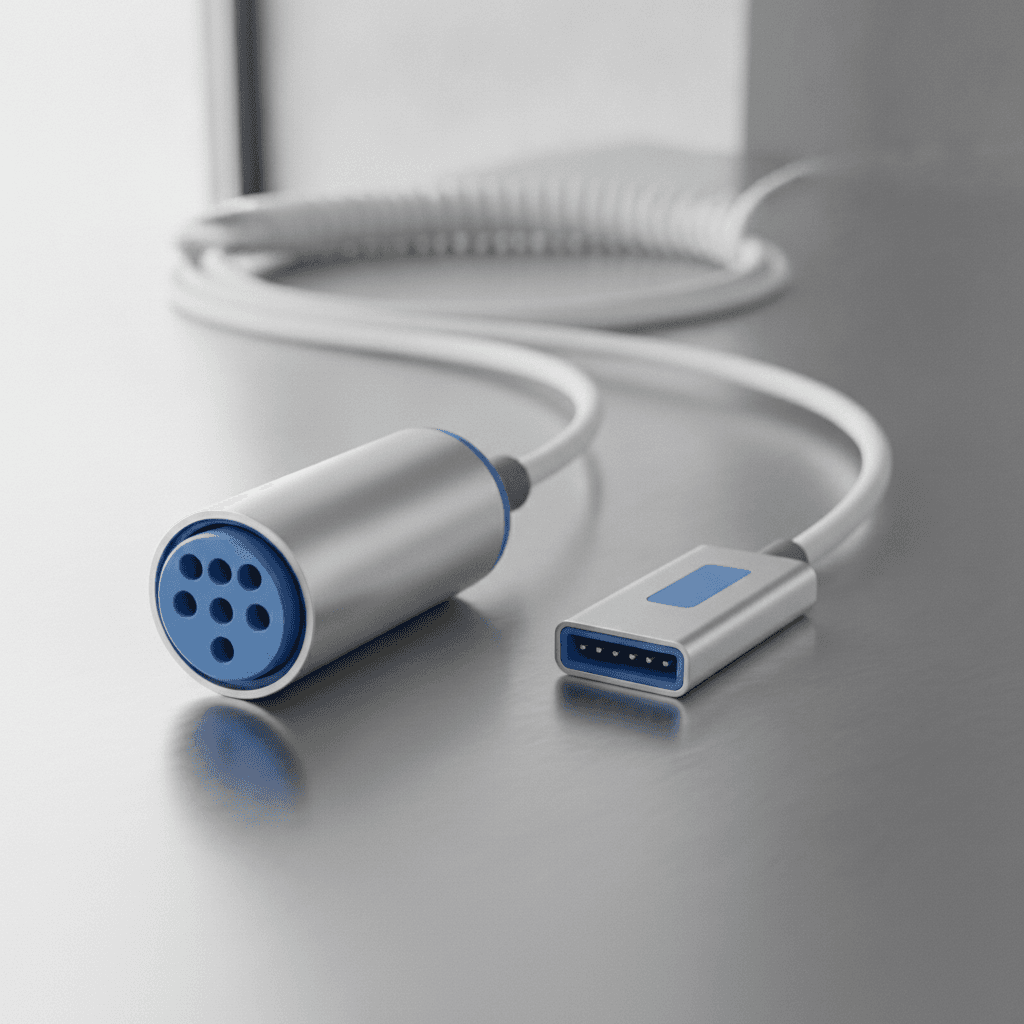
NACS vs J1772: Best Charger for a Mixed-Brand Garage
See which 2026 EVs use NACS or J1772, when an adapter is safe, and what a mixed-brand household should buy for dependable home charging.
Comparison
Quick answer: NACS, standardized as SAE J3400, is now the factory port on Tesla, Rivian, Hyundai, Kia, Genesis, Lucid, Toyota, Lexus, Subaru, and Cadillac's Optiq, while Ford, most of GM's other EVs, and Honda's Prologue still ship native CCS1/J1772 through the 2026 model year. Neither charger you buy today is a mistake: the 240V wiring is identical, and a UL 2252-certified adapter bridges either direction for AC home charging. For a household with two EVs on two different ports, buy one dual-connector charger like the Tesla Universal Wall Connector, or one charger sized to your primary car plus one UL 2252-listed adapter for the other, never an uncertified one to save $20.
Best for
A buyer worried the connector shift will make a home charger a mistake to buy today, and mixed-brand households with a NACS car and a J1772 car sharing one charger.
Wrong fit
DC fast-charging or public-network questions. This is about the connector on a home Level 2 charger.
Tradeoff
A single-connector charger is cheaper up front but leans on an adapter later. A dual-connector unit costs a little more and removes the question entirely.
The connector shift is real, but it is a smaller problem than it feels like. NACS, the Tesla-style plug now standardized as SAE J3400, is becoming the default port on new EVs sold in the US, replacing J1772 on most new models. That sounds like a reason to freeze, and it is not. A good J1772 home charger you buy today is not a mistake, because home charging is alternating current and the plug is bridged with an inexpensive adapter, while the wiring in your wall stays exactly the same.
If you want to remove the question completely, buy a charger that already speaks both. This page explains what is changing, why your charger still works either way, and when the connector actually matters.
Quick Answer: Does the Connector Change Your Buy?
Situation
What to do
You want zero connector worry
Buy a dual-connector unit like the Tesla Universal Wall Connector
You have a J1772 car now, NACS car later
A J1772 charger plus an adapter works fine, or buy dual
You have a NACS car now (newer model)
Buy a NACS charger, or dual, and use a J1772 adapter for guests
You already own a J1772 charger
Keep it. An adapter bridges a future NACS car
Two cars, two different ports in one garage
One dual-connector charger, or one charger for your primary car plus a UL 2252-certified adapter for the other
The wiring, the breaker, and the install do not change with the connector. Only the last few inches of plug do, and that is the cheap, swappable part.
What NACS and J1772 Actually Are
J1772 is the older standard connector that most non-Tesla EVs used for Level 1 and Level 2 AC charging. NACS is the Tesla connector, now opened up and standardized as SAE J3400, which the major automakers have adopted for new vehicles. Over 2024 and 2025, brand after brand announced NACS ports on upcoming models, which is why new cars increasingly ship with the Tesla-style port.
For home charging, both carry the same thing: 240 volt alternating current from your wall to the car's onboard charger. The car converts it. That is why the connector is a physical fit question, not a compatibility wall. An adapter that costs a fraction of the charger bridges the two.
Which 2026 EVs Have Native NACS, and Which Still Ship J1772/CCS1
This is the split that decides whether you need an adapter at all. Checked 2026-09-20.
Native NACS (SAE J3400) port from the factory:
Brand and model
Note
Tesla, all models
NACS since inception
Hyundai Ioniq 5 (2025+), Ioniq 9 (2026)
Kia EV6 (2026, excludes EV6 GT), EV9 (2026)
Genesis GV60, Electrified GV70 (2026)
Rivian R1S, R1T (2026 model year on)
Prior model years shipped CCS1; NACS is new for 2026
Lucid Gravity (2025-2026)
Cadillac Optiq (2026)
The only GM EV with native NACS before GM's fleet-wide 2027 switch
Toyota bZ, bZ Woodland (2026); Lexus RZ, ES (2026); Subaru Solterra, Trailseeker, Uncharted (2026)
Shared Toyota-Subaru EV platform
Mercedes-Benz CLA with EQ Technology (2026)
Nissan Leaf (2026, arriving fall 2025)
Special case, see below
The 2026 Nissan Leaf is worth calling out on its own: its NACS port is wired for DC fast charging only, with a separate SAE J1772 port for AC Level 2 and Level 1 charging. A Leaf owner still needs a J1772-compatible home charger regardless of the NACS inlet.
Still native J1772/CCS1, needs an adapter only for a NACS-only charger:
Brand and model
Native NACS date
Ford Mustang Mach-E, F-150 Lightning
Not announced for 2026
Chevrolet Blazer EV, Equinox EV, Silverado EV; GMC Hummer EV (Pickup and SUV), Sierra EV; Cadillac Lyriq, Escalade IQ, Escalade IQL, Vistiq
2027 model year, GM-confirmed
Honda Prologue
2024-2025 confirmed CCS1; 2026 status not independently verified this run
CCS1's upper half is the same shape as a J1772 plug, so every CCS1 car in that table already charges from an ordinary J1772 Level 2 home charger with zero adapter. The adapter only enters the picture if you buy a NACS-only charger, like a bare Tesla Wall Connector without the built-in J1772 adapter, for a car that has not made the switch yet.
What we could not verify this run: Volkswagen's ID.4 native-port timeline, and whether the 2026 Honda Prologue carries over its CCS1 port or moves early. Both are left out of the tables above rather than guessed, and should be checked before a buyer with either car makes a charger decision based on connector alone.
Why a J1772 Charger Is Not Obsolete
Three reasons a J1772 home charger you buy today keeps working:
The wiring does not care. Your 240V circuit, breaker, and wire are the expensive part, and they are connector-agnostic. Nothing behind the wall changes.
Adapters bridge the plug. A NACS car can charge from a J1772 charger with an adapter, and a J1772 car can charge from a NACS charger with an adapter. These are cheap and widely available.
AC home charging is simple. The connector shift is most consequential at DC fast chargers on the road, which we do not cover here. At home, on AC, the adapter path is clean.
So the honest answer to "will my charger be a mistake" is no, as long as you bought a safe, correctly sized unit. Buying the wrong amperage or an app-dependent no-name unit is a bigger regret than the connector, and both are covered in EV charger buying mistakes.
The Both-Connectors Option
If you want to skip the adapter and the question entirely, the Tesla Universal Wall Connector is the current clean answer. It is a 48 amp (11.5 kW) hardwired charger with the NACS plug plus an integrated J1772 adapter built into the handle, so it charges nearly any EV sold in North America without a loose adapter to lose. As of mid-2026 it runs $600 direct from Tesla. For a mixed-brand household, or a home where the next car might be anything, a dual-connector unit removes the guesswork. It is one of the reasons it shows up on the best home EV chargers list, and it features in the Tesla vs ChargePoint home charger comparison.
Are Aftermarket Adapters Actually Safe? The UL 2252 Standard
An AC connector adapter is not a toy accessory. It carries the full continuous load of a Level 2 charge, the same current that a cheap, non-GFCI NEMA 14-50 outlet has been documented to melt (see EV charger safety), so buy one that is safety-listed, not the cheapest option on a marketplace search.
The relevant standard is UL 2252, which covers conductive EV charging adapters and couplers for both AC and DC use, separate from UL 2594, the standard for the charger (EVSE) itself. A handful of certified options as of 2026:
Adapter
Direction
Certification
Rating
Note
Lectron NACS-to-J1772
NACS charger to J1772 car
UL 2252
80A at 240V, up to 19.2 kW
AC Level 1/2 only, not DC
Lectron J1772-to-NACS
J1772 charger to NACS car
UL 2252
80A at 240V, up to 19.2 kW
AC Level 1/2 only, not DC
A2Z EV Stellar NACS-to-J1772
NACS charger to J1772 car
UL 2252 / CSA C22.2
80A continuous, about 19.2 kW
Explicitly not compatible with NACS DC charging
GM NACS Level 2 Adapter (OEM)
J1772 charger to NACS-equipped GM EV
GM factory accessory
Up to 80A, 277V AC
Sold for GM EVs with a native NACS inlet
A passive AC adapter like these does not convert a protocol, it only bridges the physical plug, so it works for Level 1 and Level 2 AC charging and never for DC fast charging. An adapter with no visible UL or CSA mark on the housing is the same category of risk as the unbranded, unlisted EVSE units covered in EV charger buying mistakes: it carries a continuous 240V load with no independent verification that its contacts, housing, and thermal limits were tested for the job.
The Mixed-Brand Garage
A household with a NACS car and a J1772/CCS1 car sharing one charger has two workable paths, and no reason to buy two separate chargers:
One dual-connector charger. The Tesla Universal Wall Connector's built-in NACS-plus-J1772 handle, described above, covers both cars with no loose adapter to keep track of.
One charger sized to the primary car, plus one UL 2252-certified adapter for the other. Cheaper up front, and fine as long as the adapter carries a real UL or CSA mark, not a marketplace listing with no certification claim at all.
Either way, the connector is a solved problem for a two-brand garage; the harder question for two EVs sharing one panel is whether you need two circuits or one charger with power sharing, which is a load and cost decision covered in EV charger for two cars.
When the Connector Actually Matters
It matters most in two cases. First, a shared or guest-heavy setup, where different cars with different ports use the same charger, and a dual-connector unit saves passing an adapter around. Second, if you strongly prefer not to keep a loose adapter, which can be misplaced or worn. Outside those, the connector is a preference, not a dealbreaker, and it should sit below amperage, safety listing, and whether the charger depends on a cloud app. A "smart" charger that bricks when the company folds is a real risk, covered in smart vs dumb EV charger.
The Practical Call
Buy the charger for the things that decide the project: the right amperage for your car and panel, a UL or ETL safety listing, and a sane install path. If you want the connector question gone, buy a dual-connector unit like the Tesla Universal Wall Connector. If you already own a solid J1772 charger, keep it and bridge a future NACS car with an adapter. Either way, the wiring in your wall is the investment, and it does not go obsolete.
Frequently Asked Questions
Will my J1772 charger become obsolete when everything switches to NACS?
No. Home charging is AC, and a J1772 charger can charge a NACS car with an inexpensive adapter, while your 240V wiring never changes. The connector shift matters most at DC fast chargers on the road, not at home. A safe, correctly sized J1772 charger you buy today keeps doing its job for years.
Should I buy a NACS or J1772 home charger in 2026?
If you want zero worry, buy a dual-connector unit like the Tesla Universal Wall Connector, which has both. Otherwise, match the charger to your current car and bridge the other case with an adapter. What matters more than the plug is the amperage, the safety listing, and whether the charger depends on a cloud app, so decide those first.
Can a Tesla charge from a J1772 charger, and can a non-Tesla charge from a Tesla charger?
Yes, both ways, with an adapter. A Tesla or other NACS car charges from a J1772 home charger using a J1772-to-NACS adapter, and a J1772 car charges from a NACS charger using a NACS-to-J1772 adapter. At home on AC this is straightforward, which is why the connector is not the make-or-break part of the buy.
What is the Tesla Universal Wall Connector, and does it work with any EV?
It is a 48 amp (11.5 kW) hardwired Level 2 charger with the NACS plug plus a J1772 adapter integrated into the handle, so it charges nearly every EV sold in North America. As of mid-2026 it is $600. It is the cleanest way to remove the connector question, especially for a mixed-brand household, without keeping a loose adapter around.
Is NACS the same as J3400?
Yes. NACS is the Tesla-designed connector, and it was standardized as SAE J3400 when it was opened up for the rest of the industry to adopt. You will see both names used for the same plug. The automakers moving new models to the Tesla-style port are adopting this standard.
Do I need to worry about the connector for the wiring or the install?
No. The 240V circuit, breaker, and wire are the same regardless of the connector, and they are the expensive, permanent part of the job. Only the plug at the end differs, and that is cheap and swappable. Size the circuit correctly for your car and panel, which is covered in the amperage and cost guides, and the connector sorts itself out.
Is a cheap, unbranded NACS-to-J1772 adapter safe for home charging?
Only if it carries a real UL 2252 or CSA C22.2 mark on the housing. That standard covers conductive EV charging adapters for continuous AC and DC use, the same category of certification the charger itself needs under UL 2594. An adapter with no visible listing is carrying the same continuous 240V load with no independent proof it was tested to do so safely, which is the same risk profile as an unlisted no-name charger.
What should a household with a NACS car and a J1772 car buy?
Either one dual-connector charger, like the Tesla Universal Wall Connector, or one charger sized to whichever car charges more often plus a single UL 2252-certified adapter for the other car. Both are workable and neither requires two separate chargers. The bigger decision for two EVs on one panel is whether you need two circuits or a power-sharing charger, covered in EV charger for two cars.
GM EVs Get Native NACS Charging Ports for 2027 Model Year, published 2026-08-19, checked 2026-09-20, source for the Cadillac Optiq exception and the 2027 fleet-wide GM transition; news.gm.com's own release blocked automated fetch this run
These guides are built from manufacturer documentation, public specifications, primary research where safety claims matter, and repeated buyer questions that show up in real ownership and installation decisions.
Manufacturer responses can clarify pricing bands, warranty terms, support footprint, or common mistakes. They do not move a page up the shortlist on their own.