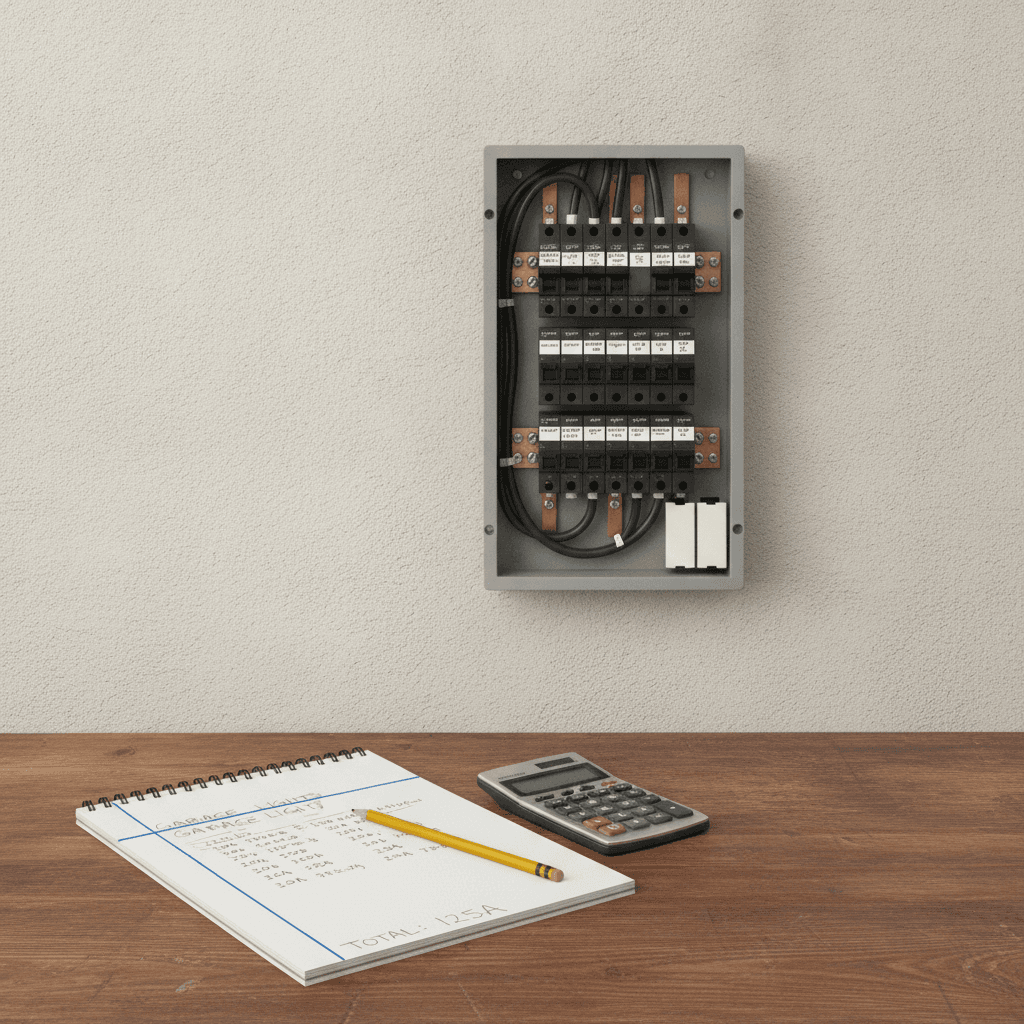
A panel upgrade is a $1,500 to $3,000 surprise, and load management often avoids it. How to know if your 100A or 200A panel can take a charger.
Installation
Quick answer: Maybe not. A panel upgrade is the single biggest surprise on an EV charger invoice, usually $1,500 to $3,000, but many homes avoid it. It depends on your service size (100A, 150A, or 200A), how full your panel is, and how much of your capacity your existing appliances already use. A licensed electrician runs a load calculation (NEC Article 220) to decide. If capacity is tight, a lower-amperage charger or a load-managing unit that shares power with existing circuits often lets a smaller panel take a charger with no upgrade at all.
Best for
Buyers with an older home, a full panel, or 100A service who want to know if a charger forces an upgrade before the electrician quotes.
Wrong fit
Buyers with a modern 200A panel with open slots and plenty of headroom, who can likely add a charger without an upgrade.
Tradeoff
A panel upgrade buys you full 48A charging and room for future loads. Load management or a smaller charger buys you a working EV charger for $1,500 to $3,000 less, if you do not need the extra capacity.
Maybe not, and that is the honest and money-saving answer. A panel upgrade is the single biggest surprise on an EV charger invoice, usually $1,500 to $3,000, but plenty of homes take a charger without one. Whether you need it comes down to three things: your service size, how full your panel is, and how much of your capacity your existing appliances already use.
We don't sell chargers, and we do not sell panel upgrades either. We save you from buying the wrong one, and the wrong buy here is paying for a service upgrade you did not actually need because nobody mentioned load management. This page tells you how to know which case you are in before the electrician arrives. It is the hub for the whole panel question, and it shares that question with two sister sites, because a home battery, solar, or a heat pump all change the same math.
Quick Answer: Will a Charger Force a Panel Upgrade?
Your situation
Likely outcome
200A service, open slots, modest existing load
Add a charger, no upgrade needed
200A service, panel full (no open slots)
May need a subpanel or a tandem breaker, not a full service upgrade
150A service, moderate load
Often fine at 32A to 40A, load calc decides
100A service, gas heat and appliances
Sometimes fine with load management, otherwise an upgrade
100A service, electric heat, range, dryer, water heater
Upgrade likely for a full 48A charger, load management may still avoid it
The pattern: the smaller your service and the more electric appliances you already run, the more likely an upgrade or load management enters the picture. The load calculation is what turns "likely" into a real answer.
What Actually Decides It: The Load Calculation
Before an electrician can tell you yes or no, they run a load calculation under NEC Article 220. It adds up your home's existing electrical demand, your heating and cooling, water heater, range, dryer, and general lighting and outlet loads, then checks whether your service has room for a continuous EV load on top. An EV charger is a continuous load, so the code counts it at 125 percent of its rating (NEC 625.41): a 48A charger is figured as 60A of demand, a 32A charger as 40A.
That is why an honest estimator asks your panel amperage, your panel's age, and what runs on electricity before quoting a number. A price given over the phone with no load calc is a guess, and guesses become change orders on the invoice. If you want to walk in with your own read, our cost and can-my-panel-handle-it estimator steps you through the same inputs, and the real cost of installing an EV charger shows how a full panel turns a $1,450 quote into a $3,850 one.
The Cheaper Alternative Nobody Mentions: Load Management
Here is the option the panel-upgrade quote usually leaves out. A load-managing charger, or a power-sharing device, watches your home's total draw and throttles the charger down when the rest of the house is using power, then lets it charge full speed when demand drops, which for most people is overnight anyway. To the load calc, the charger no longer looks like a fixed 60A of demand, so a panel that could not otherwise take it often can.
For a 100A or 150A home, this is frequently the difference between a $1,500 to $3,000 upgrade and no upgrade at all. The code section that makes it work is NEC 625.42(A), which lets the service calculation use the maximum load the energy management system permits instead of the charger's nameplate rating. The two paths priced against each other, with the actual hardware named and costed, are in panel upgrade vs load management. Chargers like the Emporia are built around this, and it is a big part of why the Emporia earns its spot in best home EV chargers. Ask every electrician who quotes you an upgrade whether load management would avoid it. Sometimes the answer is no, and the upgrade is real. Often the answer is yes, and you just saved thousands.
This is exactly the math behind adding a second EV to a tight panel, too. Sharing one circuit between two chargers, instead of running two full circuits, is often the difference between avoiding an upgrade and forcing one. The brand-specific specs for how that sharing actually works are in EV charger for two cars.
When the Upgrade Is Worth It Anyway
Load management is not always the right answer, and pretending it is would be dishonest. A panel or service upgrade is worth the money in a few cases.
You are electrifying the whole house. If you are adding an EV charger this year and a heat pump or an induction range next year, upsize the service once instead of paying for two separate jobs. Size the upgrade for everything coming, not just the charger. If that is you, the heat pump electrical-panel guide covers the other load, and doing both loads on one load calc saves a second visit.
You are adding solar or a battery. Solar and a home battery change your panel math and can shift whether an upgrade makes sense, and they sometimes reduce your grid draw enough to matter. If a battery or solar plan is on the table, weigh it before you commit to a bigger service, and homebattery.guide covers how the panel, the battery, and the charger interact.
Your panel is genuinely at its limit. A full 100A panel running electric heat, a range, a dryer, and a water heater may simply not have headroom for a continuous EV load, even a managed one. If the load calc says the service is maxed, the upgrade is real, and it is the safe answer. Do not let a wishful workaround put you on an overloaded service.
How to Read Your Own Panel Before the Quote
You can gather most of what the electrician needs in ten minutes.
Find your service size. Look at the main breaker at the top of your panel. It reads 100, 150, or 200, that is your service amperage. This is the single biggest factor.
Count your open slots. Look for empty positions where a new double-pole breaker could go. A charger needs two adjacent slots. No open slots does not automatically mean a service upgrade, sometimes a subpanel or tandem breakers solve it, but it is a flag to raise with the electrician.
List your big electric loads. Electric heat, electric range, electric dryer, electric water heater, air conditioning. The more of these you run, the tighter your headroom. A gas-heat, gas-range home has far more room for a charger than an all-electric one on the same service.
Bring those three answers to the quote. They let a good electrician give you a real number instead of a guess, and they let you question a quote that assumes the worst. For the amperage side of the decision, read the EV charger amperage guide, because choosing 32A instead of 48A is itself a way to avoid an upgrade.
Frequently Asked Questions
Can I install an EV charger on a 100 amp panel?
Often yes, but it depends on what else runs on electricity. A 100A home with gas heat and a gas range usually has room for a 32A or 40A charger, especially with load management. A 100A home with electric heat, an electric range, dryer, and water heater is tighter and may need an upgrade for a full 48A charger. A load calculation under NEC Article 220 gives the real answer, and load management often lets a smaller panel take a charger without an upgrade.
How much does a panel or service upgrade cost for an EV charger?
Qmerit, which runs the installs, puts the added cost of an upgrade to 200A service at $1,500 to $3,000 on a page dated March 18, 2026, on top of a Level 2 install it puts at $749 to $2,500 with an average of $1,700. Your own quote can land outside that if the utility has to move the meter or the service drop, so treat it as the installer-network range and verify locally. It is the single biggest surprise on an EV charger invoice. Before you accept it, ask the electrician whether load management or a lower-amperage charger would avoid it, because for many homes it will.
Do I need a 200 amp panel to charge an EV at home?
No. Plenty of homes charge on 100A or 150A service, especially with a 32A or 40A charger or a load-managing unit. A 200A panel gives you full 48A charging and headroom for future electric loads, so it is worth it if you are electrifying the whole house. But if your existing service has room, adding a charger to a 100A or 150A panel is common and safe once a load calc confirms the capacity.
What is load management and can it help me skip a panel upgrade?
Load management is a charger or device that watches your home's total electrical draw and throttles the charger when the rest of the house needs power, then charges full speed when demand drops, usually overnight. Because the charger no longer counts as a fixed full-time load, a panel that could not otherwise take it often can, and NEC 625.42(A) says so directly: the service calculation may use the maximum load the energy management system permits. For many 100A and 150A homes it is the difference between a $1,500 to $3,000 upgrade and none. Ask every electrician whether it applies before you accept an upgrade quote, and read panel upgrade vs load management for what the hardware costs.
How do I know if my panel is full?
Open the panel cover and look for empty breaker positions. A charger needs two adjacent open slots for a double-pole breaker. If every slot is used, the panel is full, but that does not automatically mean a service upgrade, since a subpanel or tandem breakers can sometimes make room. A full panel is a flag to raise with your electrician, not an automatic verdict. If you are unsure, leave the cover on and let the electrician assess it.
Should I upgrade my panel now if I am also adding a heat pump later?
Yes, size the upgrade once. If you know a heat pump, an induction range, or other electric loads are coming, have the electrician run the load calc for everything, not just the charger, and upsize the service a single time. Two separate upgrade jobs cost far more than one. Include the heat-pump load in the same calculation and scope both projects before the electrician starts. This is also the case where load management is the wrong answer, because it caps the car without adding a single amp for anything else.
These guides are built from manufacturer documentation, public specifications, primary research where safety claims matter, and repeated buyer questions that show up in real ownership and installation decisions.
Manufacturer responses can clarify pricing bands, warranty terms, support footprint, or common mistakes. They do not move a page up the shortlist on their own.