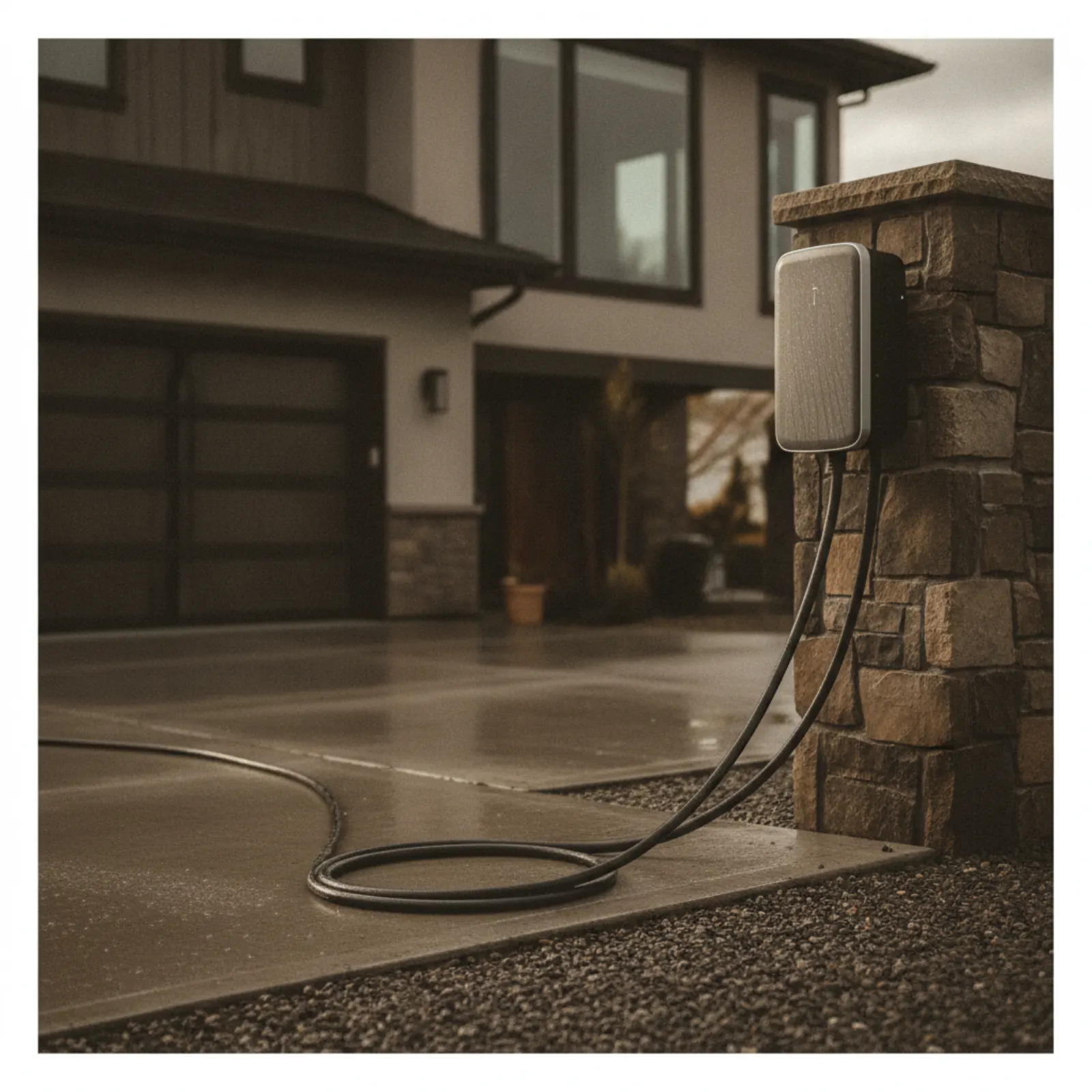
Home Charging Guide
Outdoor EV Charger Installation: Weather, Cable Reach, Placement
A practical guide to outdoor EV charger installation, including weather rating, cable reach, pedestal vs wall mount, GFCI, snow, sun, parking, and permits.
Quick answer: Outdoor EV charging works well when the charger is rated for the location, mounted securely, reachable without cable strain, protected from damage, and installed under permit by an electrician.
Best for
EV owners charging in a driveway, carport, side yard, or uncovered parking spot.
Wrong fit
Public charging, multifamily fleet installs, or DIY electrical work.
Tradeoff
Outdoor placement can be simple, but bad cable reach or weather exposure makes daily charging annoying.
Methodology
These guides are built from manufacturer documentation, public specifications, primary research where safety claims matter, and repeated buyer questions that show up in real ownership and installation decisions.
Manufacturer responses can clarify pricing bands, warranty terms, support footprint, or common mistakes. They do not move a page up the shortlist on their own.
Next Step
What to do next
Use one of these three paths. They are here to move the decision forward, not add more noise.
Want the full buyer path in your inbox? We send the short version.
Related Guides
Load Management • EVEMS
Panel Upgrade vs Load Management for EV Charging
A 200A service upgrade adds $1,500 to $3,000. A listed load-management device runs $299.99 to $449. When the cheaper path is legal, and when it is not.
Panel Upgrade • Electrical Panel
Do I Need a Panel Upgrade for an EV Charger?
A panel upgrade is a $1,500 to $3,000 surprise, and load management often avoids it. How to know if your 100A or 200A panel can take a charger.
EV Charger • Hardwired
Hardwired EV Charger vs NEMA 14-50: Cost and Safety
Plug-in is cheaper only when a code-compliant NEMA 14-50 exists. Compare outlet, GFCI, amperage, safety, and long-term cost with hardwiring.